These surviving pre-1945 hotels cluster around three architectural moments — Mission/Spanish Colonial Revival (1910s–20s), Art Deco (late 1920s–30s), and the bungalow colony format unique to Southern California. The ones that survived found a strong identity and held it.
Sunset Tower Hotel
HotelWest Hollywood, CA
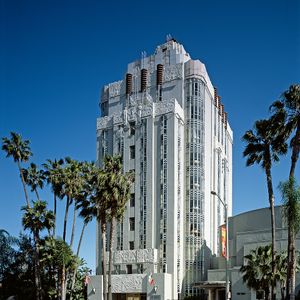
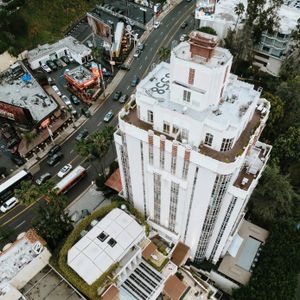


Leland Bryant designed this Zigzag Moderne tower in 1929; it opened in 1931 sited just outside LA's city limits to exceed its height restrictions — the first high-rise on the Strip. The bas-relief friezes of animals, zeppelins, and mythological figures wrapping the facade are among the finest decorative surfaces on any building in Los Angeles.
The Beverly Hills Hotel
HotelBeverly Hills, CA


Elmer Grey's Mission Revival design predated Beverly Hills itself — the city wasn't incorporated until 1914. Developer Burton Green built it to anchor a real estate land rush along an unpaved Sunset corridor. The iconic pink and the Polo Lounge name are both 1940s additions; Paul Williams redesigned the Crescent Wing in 1949.
The Hollywood Roosevelt
HotelLos Angeles, CA
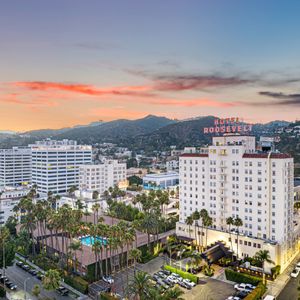
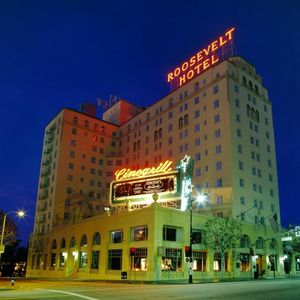

Financed by Fairbanks, Pickford, Louis B. Mayer, and Sid Grauman, and designed by Fisher, Lake & Traver in Spanish Colonial Revival. Its Blossom Ballroom hosted the inaugural Academy Awards on May 16, 1929 — the entire ceremony lasted 15 minutes. Marilyn Monroe lived in a poolside cabana here for two years early in her career.
The Georgian Hotel
HotelSanta Monica, CA

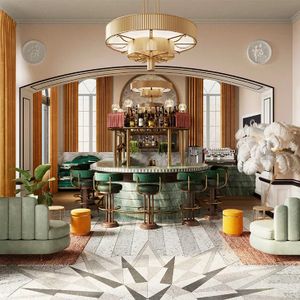
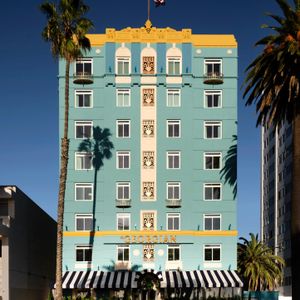
Santa Monica's finest Art Deco building: a seafoam-green facade, arched loggia, and ornamental metalwork facing Ocean Avenue. It opened the same year Prohibition ended and became a favored coastal retreat for Golden Age stars escaping the inland heat. The period detailing is among the best-preserved on the Southern California coast.
Hotel Figueroa
HotelLos Angeles, CA


Originally built as a YWCA-funded residential hotel for women traveling alone — one of the few respectable options available to solo female travelers in 1920s Los Angeles. The lobby's Spanish Colonial and Moorish detailing is largely intact, a rare survivor of Downtown's original hospitality corridor.
Chateau Marmont
HotelLos Angeles, CA

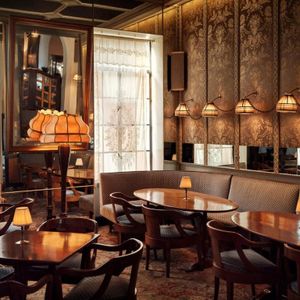
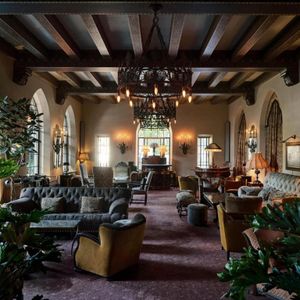
Designed by Arnold Weitzman and modeled on the Château d'Amboise in France's Loire Valley, it opened as luxury apartments in February 1929 and converted to a hotel in 1932 when the Depression emptied its tenancies. Built earthquake-proof, perched above the Strip — it became the preferred refuge of Hollywood's most private, and most destructive, guests.
Miramar Hotel & Bungalows
HotelSanta Monica, CA

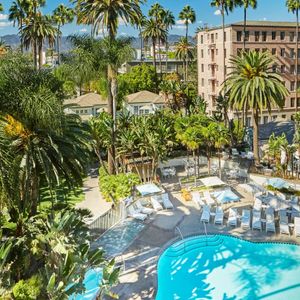
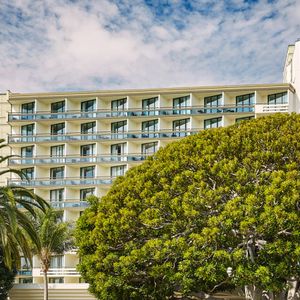
The property's most elemental feature predates the hotel entirely: the massive Moreton Bay fig tree planted in the 1870s, now one of the largest in California. The Colonial Revival structure dates to 1921. Its bluff position at Wilshire and Ocean made it the prestige arrival address for visiting heads of state through the mid-century.
Hotel Shangri-La
HotelSanta Monica, CA
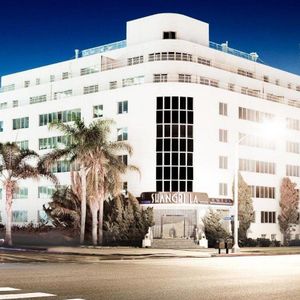
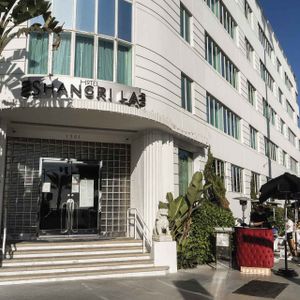

William Foster's Streamline Moderne tower on Ocean Avenue — evoking an ocean liner at anchor through curved balconies, horizontal banding, and nautical detailing — opened in 1940 and served as an Army Air Forces rehabilitation station during WWII. One of the most architecturally coherent late-1930s buildings in California; landmarked and intact, recently rebranded as The Eden.
The Huntington
HotelPasadena, CA

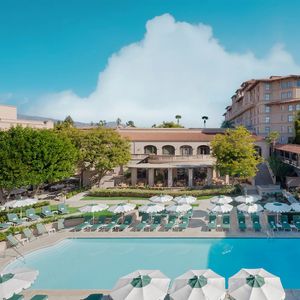
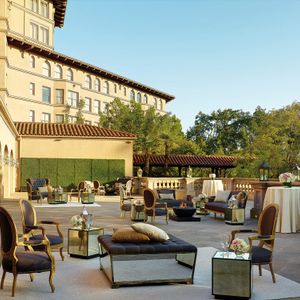
The Hotel Wentworth opened in 1907 to heavy rains and bankruptcy; Henry Huntington bought it in 1911 and handed it to Myron Hunt — architect of the Rose Bowl and the Huntington Library next door — who rebuilt it as a Mission Revival resort on 23 Arroyo Seco acres. The main building is a faithful 1991 reconstruction; the Georgian and Viennese ballrooms are original.
Culver Hotel
HotelCulver City, CA

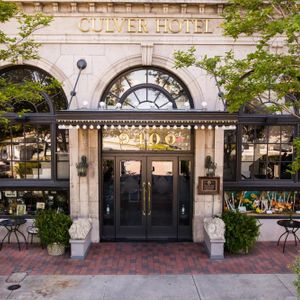
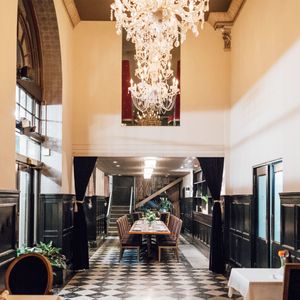
Harry Culver's triangular Renaissance Revival building responds to an irregular intersection that remains one of Culver City's defining urban moments. Its primary claim to cultural memory: the cast of Munchkin performers stayed here during the 1938–39 production of The Wizard of Oz at the adjacent MGM lot.
The Biltmore Los Angeles
HotelLos Angeles, CA
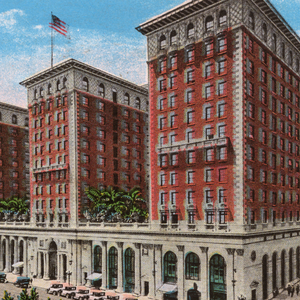
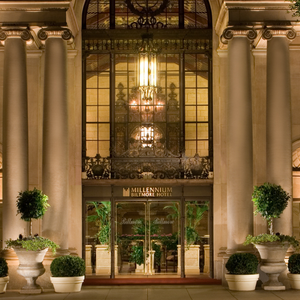

Schultze & Weaver's Beaux-Arts complex was the largest hotel west of Chicago at opening. The Academy of Motion Picture Arts and Sciences was founded in its Crystal Ballroom in 1927; the Biltmore Bowl hosted eight Oscar ceremonies from 1931 to 1942. JFK formally launched his presidential campaign here at the 1960 Democratic National Convention.