Los Angeles hides some of the most ambitious landscape design in America — from Robert Irwin's living artwork at the Getty to a pre-war Japanese masterpiece on a Pasadena side street, a Gehry-designed porcelain fountain on a hidden rooftop, and a spiritual sanctuary with swans just off Sunset Boulevard. What connects them is intention: someone obsessed over every sightline, every bloom sequence, every stone. Fifteen gardens spanning 120-acre estates to two-acre secrets, all rewarding the rarest thing LA offers — slowness.
Virginia Robinson Gardens
Historic Gardens EstateBeverly Hills, CA
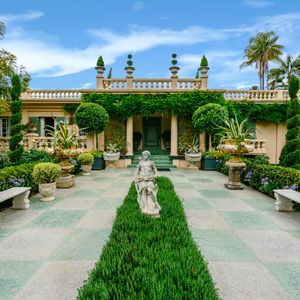
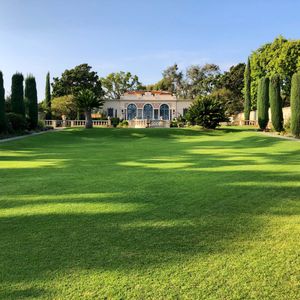
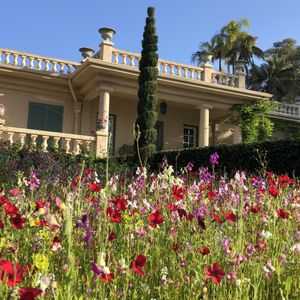

The king palm grove here (Archontophoenix cunninghamiana) is the second largest outside Australia — over 100 trees planted in the 1910s, now towering to 60 feet. Five distinct garden rooms demonstrate different horticultural traditions: Italian terrace, tropical palm forest, rose garden, kitchen garden, and a formal mall planted with camellias and gardenias.
Greystone Mansion & Park
ParksBeverly Hills, CA
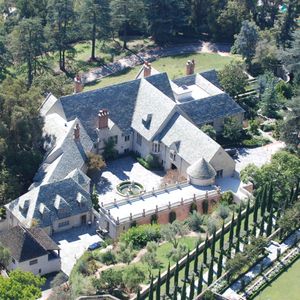
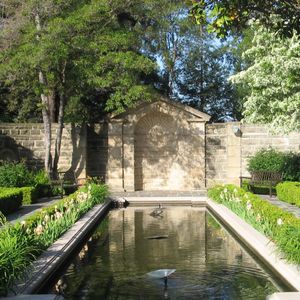
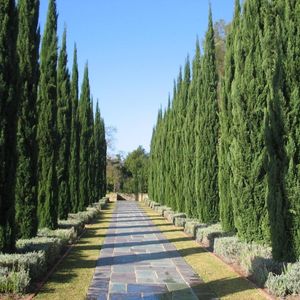
A formal English garden transplanted to a Mediterranean climate, which is an interesting horticultural tension. The cypress allées, clipped hedges, and symmetrical beds follow European estate traditions, but the plant palette has been quietly adapted — species that tolerate dry summers standing in for ones that need English rain.
Peace Awareness Labyrinth & Gardens
Spiritual GardensLos Angeles, CA
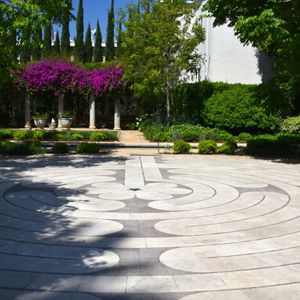
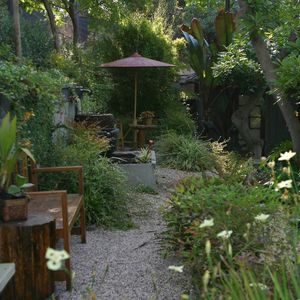
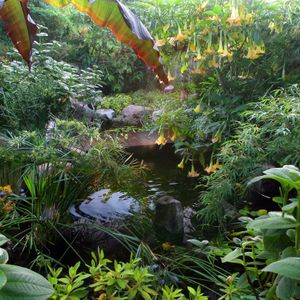
An Asian-themed meditation garden with sixteen water features and a koi pond, planted densely to create acoustic and visual enclosure — bamboo, bird of paradise, ficus. The design uses layered planting to block city noise, which is a practical lesson in how gardens can engineer silence through leaf density and canopy height.
Arlington Garden in Pasadena
Community GardenPasadena, CA
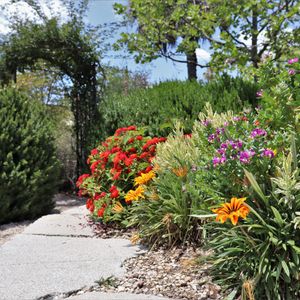
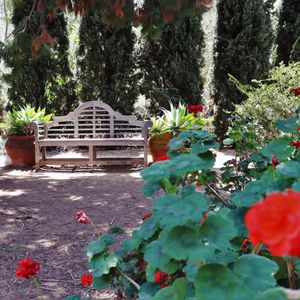
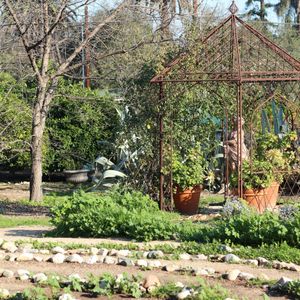
A demonstration garden for what actually belongs in Southern California's climate. Everything here is drought-adapted — native sages, Mediterranean lavenders, agaves, citrus — showing that water-wise planting doesn't mean austere. The seven-circuit labyrinth is planted with creeping thyme that releases fragrance underfoot.
Japanese Gardens
GardensVan Nuys, CA
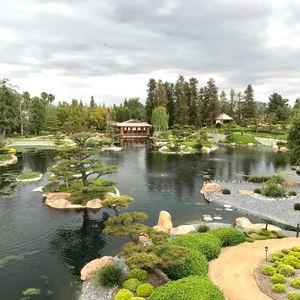
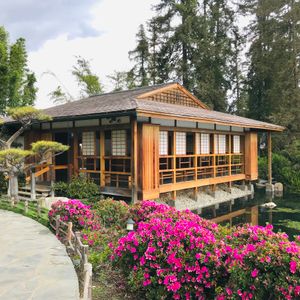
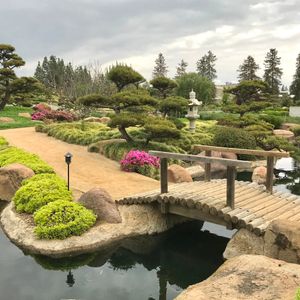
A stroll garden modeled after 18th-century feudal lord estates, built around the Japanese principle of borrowed scenery — framing distant views as part of the composition. The plantings are restrained by design: pine, bamboo, iris, and moss, pruned to suggest age and wind exposure. Every branch angle is deliberate.
Storrier Stearns Japanese Gardens
Japanese GardenPasadena, CA
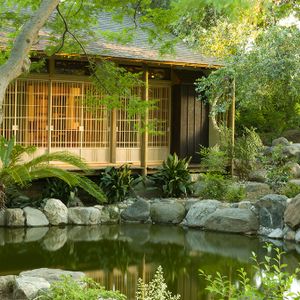
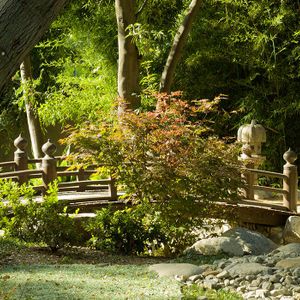
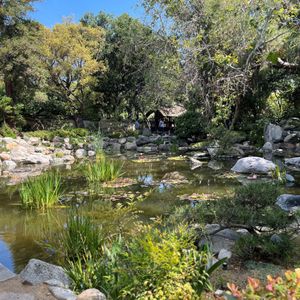
Built in 1935 by Kinzuchi Fujii, the most prolific Japanese garden designer in pre-war Southern California. The pond-style stroll garden uses classic Japanese techniques: asymmetric stone placement, carefully shaped pine and juniper, and moss groundcover to evoke mountain landscapes in miniature. The 15-foot waterfall feeds two interconnected koi ponds.
Self-Realization Fellowship Lake Shrine
Place of worshipLos Angeles, CA
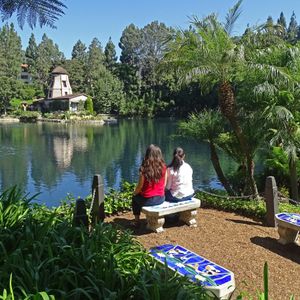
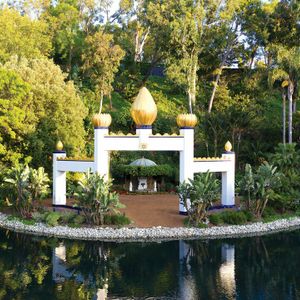
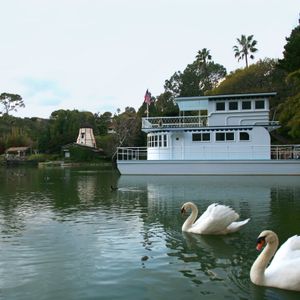
Built around a natural spring-fed lake in a geological depression, which creates a sheltered microclimate warmer and more humid than surrounding Pacific Palisades. This allows tropical and subtropical species — lotus, water lilies, banana plants, bougainvillea — to thrive just a half mile from the ocean. The planting feels lush because the landform makes it possible.
Los Angeles County Arboretum & Botanic Garden
GardensArcadia, CA
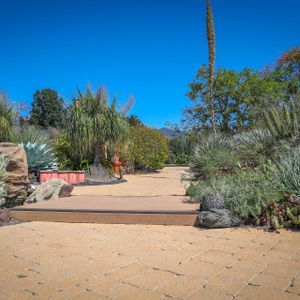
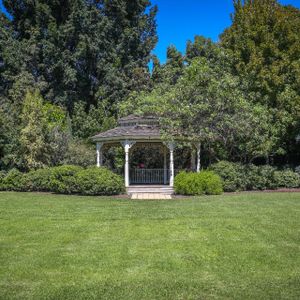
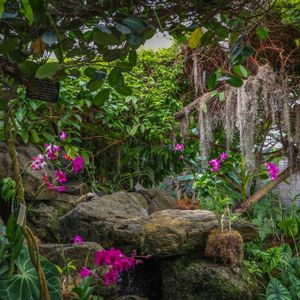
Organized by continent of origin rather than plant type, so you walk from an Australian eucalyptus grove into a South African protea garden into a Madagascar succulent collection. It's a crash course in biogeography — how geography and isolation shape what grows where. The tropical greenhouse is where you'll find orchids and bromeliads that can't survive LA's dry air.
Blue Ribbon Garden
Urban Garden OasisLos Angeles, CA
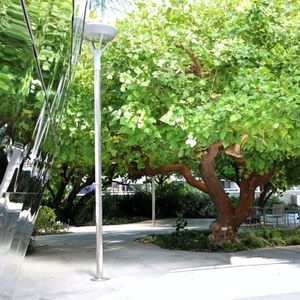
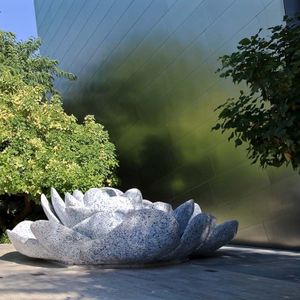
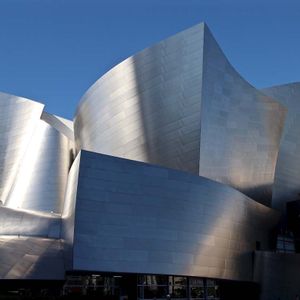
(Walt Disney Concert Hall, DTLA) A rooftop garden that blooms year-round despite extreme conditions — reflected heat from Gehry's steel panels, shallow soil depth, and wind exposure. The plant selections are tough Mediterranean and California natives that tolerate heat and drought: lavender, rosemary, ornamental grasses, and shade trees trained to grow in constrained root spaces.
The Huntington
Gardens and MuseumSan Marino, CA
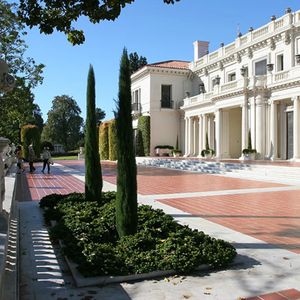
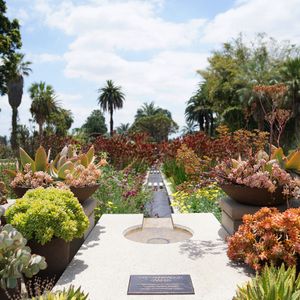
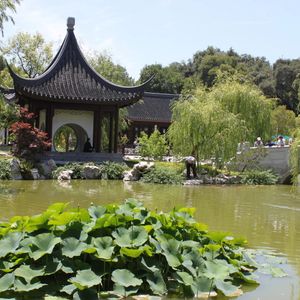
One of the world's great desert gardens lives here — over 5,000 species of cacti and succulents arranged like sculpture. But the real range is the point: a Chinese garden engineered around water flow, a bamboo forest, and a jungle garden where canopy layers are stacked the way they'd grow in the wild. Few places teach you more about how climate shapes plants.
Descanso Gardens
Botanical GardensLa Canada Flintridge, CA
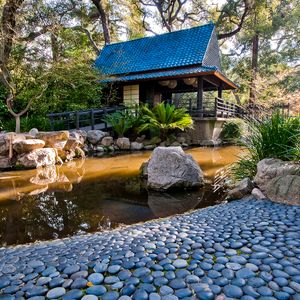
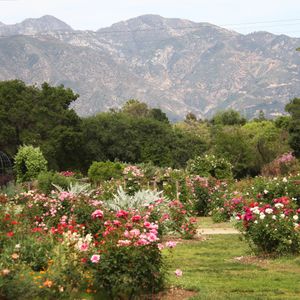
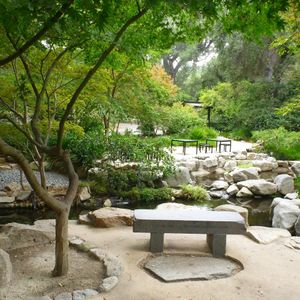
Home to the largest collection of camellias (Camellia japonica) in North America — around 34,000 plants in 600 varieties, best seen January through April. What makes Descanso unusual is its oak woodland understory: the camellias thrive in dappled shade beneath California live oaks, a pairing that mimics their native forest habitat in East Asia.
The Getty Center
Art MuseumLos Angeles, CA
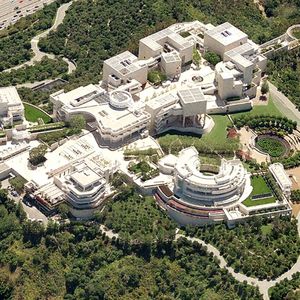
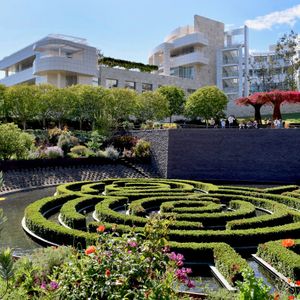
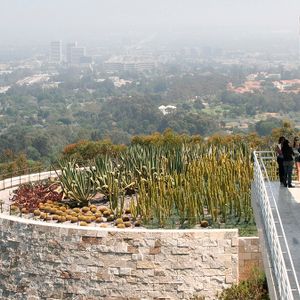
(Brentwood) Artist Robert Irwin designed the garden as a living artwork that's never the same twice — over 500 plant varieties selected for color, texture, and seasonal change rather than botanical taxonomy. The azalea maze at the center floats on water. The lesson here is about design intent: plants chosen for how they look together, not where they're from.
James Irvine Garden
GardensLos Angeles, CA
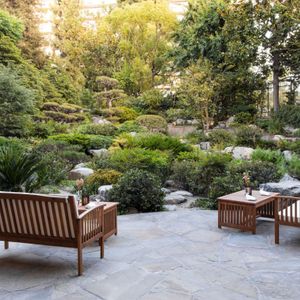
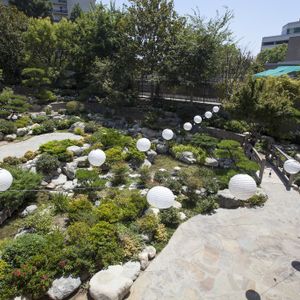
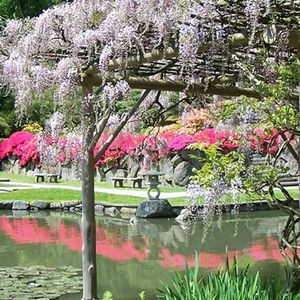
Designed in the Zen dry-garden tradition of Kyoto, where negative space matters as much as planting. The 170-foot stream is the central element — plants are subordinate to stone and water. Ferns, Japanese maples, and mondo grass are placed to soften edges, not to be specimens. It teaches restraint as a design principle.
UCLA Mathias Botanical Garden
Botanical Garden OasisLos Angeles, CA
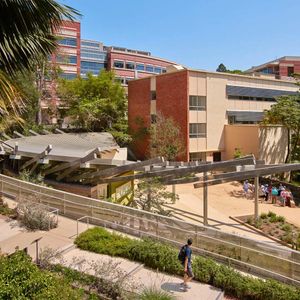
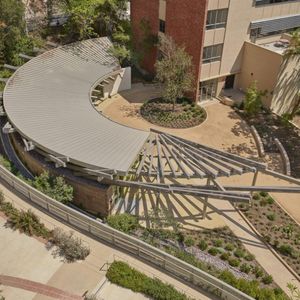
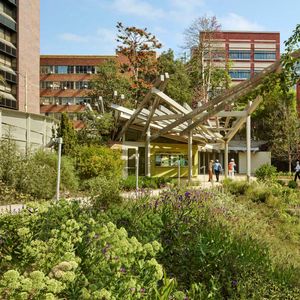
A teaching collection with over 3,000 species packed into 7.5 acres, organized by habitat zone — desert plants on the dry eastern slope, subtropical species in the shaded interior ravine. It's a living textbook on microclimates: walk 200 feet downhill and the temperature, humidity, and light change enough to support completely different plants.
Exposition Park Rose Garden
ParkLos Angeles, CA
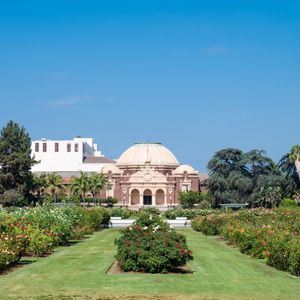
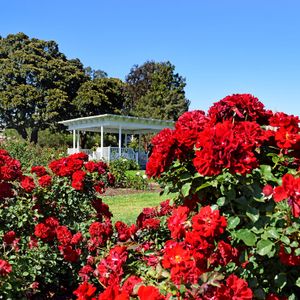
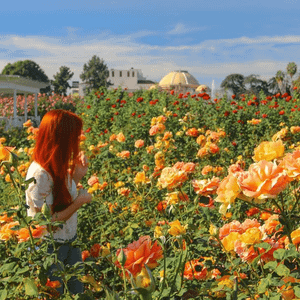
(South LA) Over 15,000 rose bushes in roughly 200 cultivated varieties — hybrid teas, floribundas, grandifloras, climbers — making it one of the largest public rose gardens in the country. Roses are heavy feeders that need consistent water and rich soil, so this garden is a testament to dedicated municipal maintenance. Peak bloom is April through May.