This group of 10 homes demonstrates is the translation of experimental ideas into cultural icons. Koenig proved industrial housing could be aspirational — one Shulman photograph did more for modernism than a decade of manifestos. Lautner redefined the relationship between structure and site, building where no one else would. Gehry interrogated the very premise of domestic architecture by deconstructing his own home. And the Eames House — arguably the most consequential on the entire list — collapsed the distinction between design philosophy and lived experience, proving that architecture's highest purpose is not the object but the life it makes possible.
Schindler House
Architectural LandmarkWest Hollywood, CA
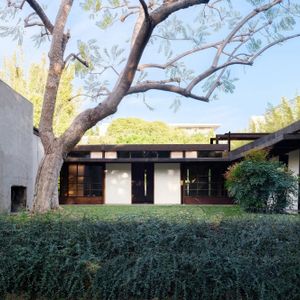
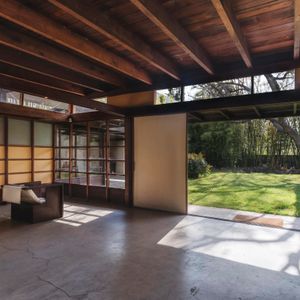
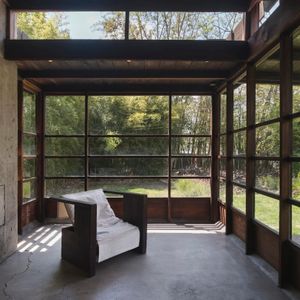

Arguably the first truly modern house in America. Built as a live-work commune for Schindler and his wife alongside the Chases, its sliding canvas walls, open floor plan, and indoor-outdoor sleeping baskets predated the entire California modernist movement. The concrete tilt-slab construction was unprecedented for a residence. Now the MAK Center for Art and Architecture (open Wed–Sun 11–6), it remains the origin point of LA's avant-garde domestic architecture.
Sheats-Goldstein House
ArchitectureBeverly Hills, CA

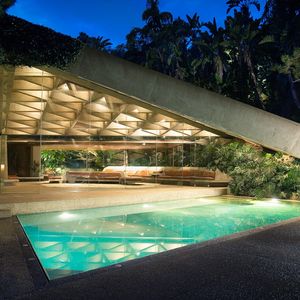
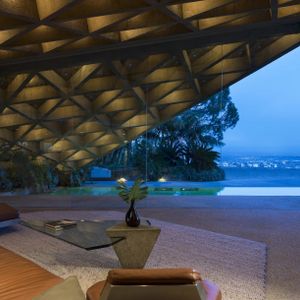
A reinforced concrete-and-glass house that seems to grow directly from its hillside site. Lautner worked on it for over 30 years with owner James Goldstein, continually refining the house, adding the famous coffered glass skylight, tennis court, and nightclub. Its appearance in The Big Lebowski cemented its pop-culture status. Goldstein donated the house to LACMA in 2016, making it arguably the most significant architectural gift to any American museum. View from Angelo View Dr.
Gehry Residence
Architectural ResidenceSanta Monica, CA
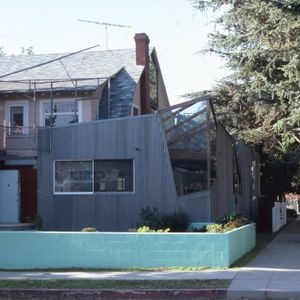
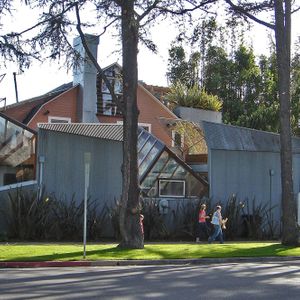
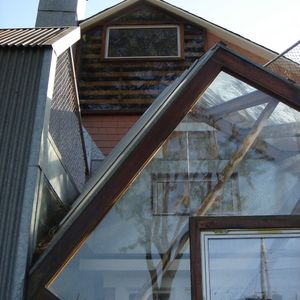
The house that changed architecture. Gehry wrapped his modest 1920s Dutch Colonial bungalow in corrugated metal, chain-link fencing, plywood, and glass at jarring angles — exposing the old house while exploding it outward. Critics were baffled; neighbors were furious. But it launched deconstructivism as an architectural movement and put Gehry on the path to the Guggenheim Bilbao. It remains his most radical and personal work, fully visible from the quiet Santa Monica sidewalk.
Eames House
Mid-century Architectural HouseLos Angeles, CA
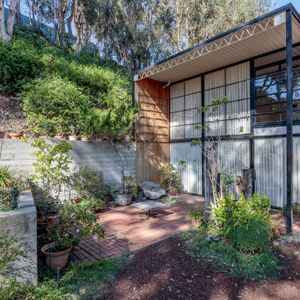
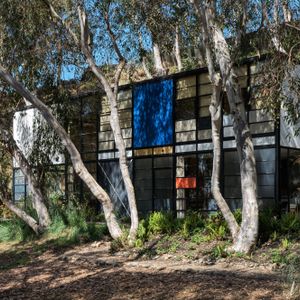

The single most influential postwar house in America. Charles and Ray built it from off-the-shelf industrial steel components — originally ordered for a different design — rearranged into a double-height studio and residence tucked against a eucalyptus hillside. Its colorful Mondrian-like panels, meadow setting, and philosophy of "getting the most of the best to the greatest number of people for the least" defined an entire design ethos. National Historic Landmark; book exterior tours ahead.
Garcia House
AttractionsLos Angeles, CA
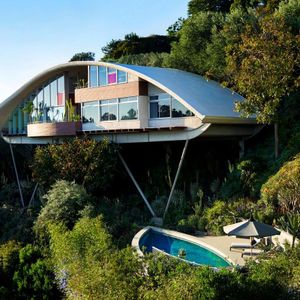
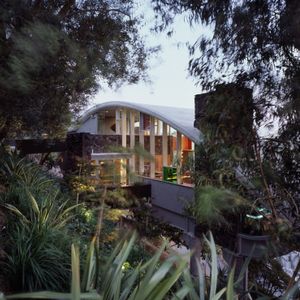
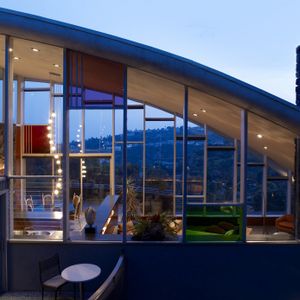
Named for its dramatic arched roof that springs from a single concrete column on the downhill side, the Garcia House appears to leap off the Mulholland ridgeline. The arch both defines the interior space and acts as the primary structural element — an engineering solution and poetic gesture in one move. Featured in Lethal Weapon 2. One of the most photographed homes on Mulholland and among Lautner's most structurally elegant designs.
Bailey House (Case Study House #21)
Other historicalLos Angeles, CA
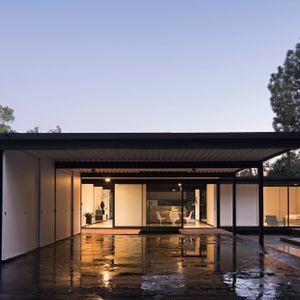
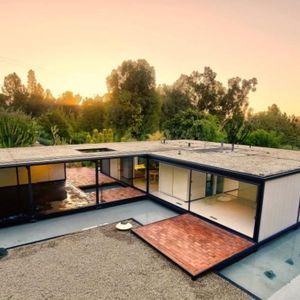
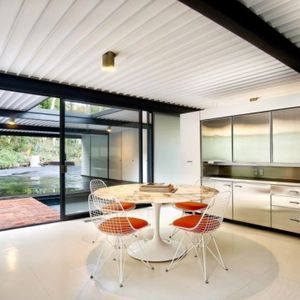
Koenig's first Case Study commission and the project that earned him CSH #22. A 1,350-square-foot steel pavilion with a water-reflecting pool that doubled the apparent size of the house. It demonstrated that a prefabricated steel-frame home could be built quickly, inexpensively, and beautifully. Recently restored, it remains one of the purest expressions of the Case Study Program's democratic ideals about modern living. Visible from Wonderland Park Ave.
Storer House
LandmarkWest Hollywood, CA
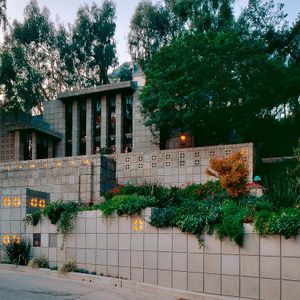
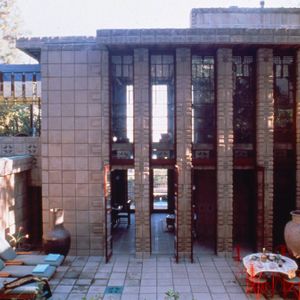
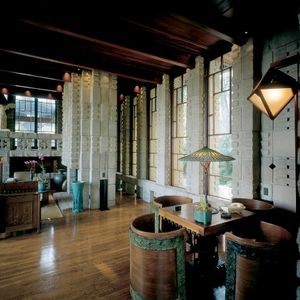
The most intimate of Wright's textile block houses, beautifully restored in the 1980s by film producer Joel Silver with the help of Wright's grandson Eric and architect Martin Eli Weil. Its two-story living room with perforated textile blocks filtering light is among the most sublime interior spaces Wright ever created. The restoration essentially saved the house from ruin and became a model for block house conservation. Private; view from Hollywood Blvd.
Chemosphere House
ArchitectureLos Angeles, CA

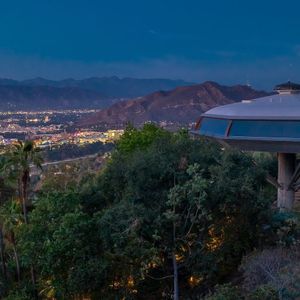
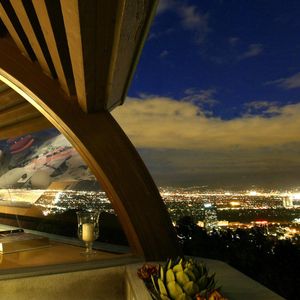
Built for aerospace engineer Leonard Malin on a 45-degree slope deemed unbuildable by conventional methods, Lautner placed an octagonal living space atop a single 5-foot-diameter concrete column, accessed by funicular. It is the most structurally audacious private home in LA — part flying saucer, part treehouse — and became an instant icon of Space Age architecture. Publisher Benedikt Taschen restored it in 2000. Impossible to miss from Torreyson Dr below.
Stahl House (Case Study House #22)
Architectural Landmark HouseWest Hollywood, CA
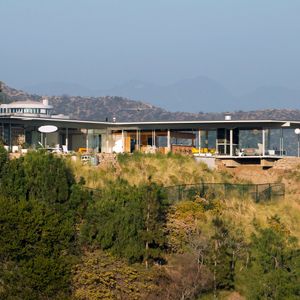
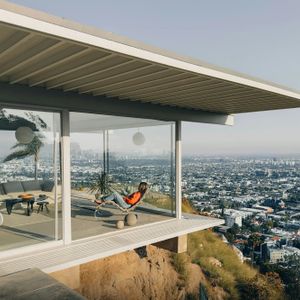
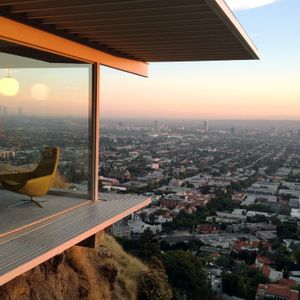
Probably the most famous house photograph ever taken: Julius Shulman's 1960 image of two women in the cantilevered glass living room floating above the LA basin at night. Koenig's steel-and-glass box proved the Case Study Program's thesis that industrial materials could produce elegant, affordable housing. The single most recognized symbol of midcentury optimism and the California lifestyle. Book tours months in advance; stunning even from below.
Schnabel House
AttractionsLos Angeles, California
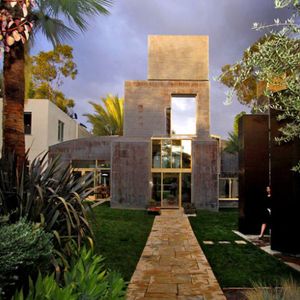
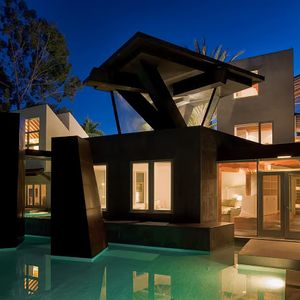
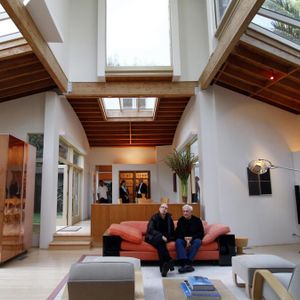
Built for Rockwell and Marna Schnabel, this is Gehry's most ambitious residential project — a 6,000-square-foot village of discrete pavilions (living, sleeping, studio) connected by courtyards and a cruciform plan. The lead-clad dome, the copper-roofed study, and the free-standing fireplace pavilion each read as individual buildings. It bridges Gehry's early deconstructivist provocations and the monumental sculptural forms of his later career. Partially visible from Carmelina Ave.