What makes this collection of 20 places exceptional is that it represents every major movement in American architecture from the 1890s to the present — Arts and Crafts, Art Deco, Streamline Moderne, International Style, Googie, Brutalism, Postmodernism, Deconstructivism, and contemporary parametric design — all within a single metropolitan area. No other American city offers that continuity. These buildings are not just landmarks. They are primary sources. Seeing them in person is not tourism, it's fieldwork for anyone who appreciates design on a grand scale.
Bradbury Building
Historic Architecture BuildingLos Angeles, CA
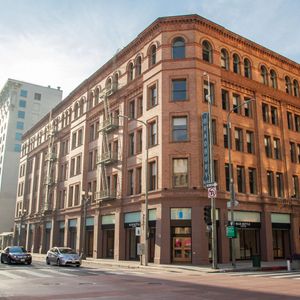
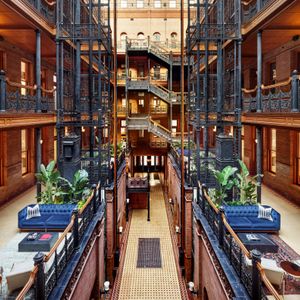
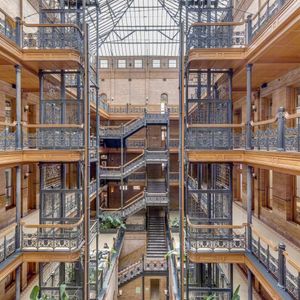

From the street it is almost nothing — a modest Romanesque facade you could walk past without a second glance. Then you step inside and the air changes. The five-story atrium is the single greatest interior space in Los Angeles: ornamental iron railings, open cage elevators, glazed brick, and a skylit roof that turns the whole building into a lantern. George Wyman was a draftsman, not a trained architect, and reportedly took the commission after consulting a Ouija board. That origin story feels right. There is something irrational about how beautiful this building is — how a commercial office block from 1893 can still make you catch your breath 130 years later. Blade Runner filmed here because it didn't need set design.
The Getty Center
AttractionsLos Angeles, CA
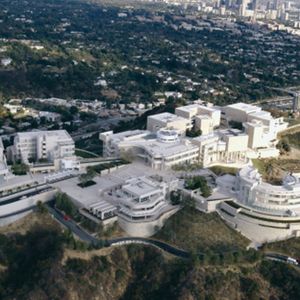
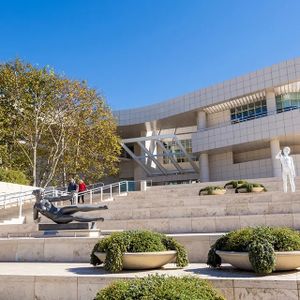
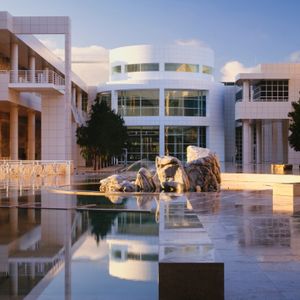
Love it or argue with it, the Getty is the most ambitious cultural complex built in America since Lincoln Center. Meier spent $1.3 billion of Getty money and thirteen years building a private acropolis on a Brentwood hilltop — travertine and aluminum panels, white modernist pavilions, Robert Irwin's Central Garden descending the slope like a slow-motion river. The tram ride up is part of the experience: the city falls away and you arrive at something that feels removed from Los Angeles entirely, which is both its greatest strength and its most legitimate criticism. It is a fortress of culture, immaculately maintained, free to enter, and still the place where most Angelenos first encounter a Rembrandt or a Cézanne.
Griffith Observatory
Iconic Observatory ViewsLos Angeles, CA
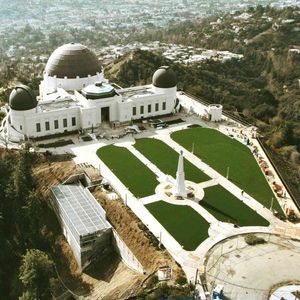
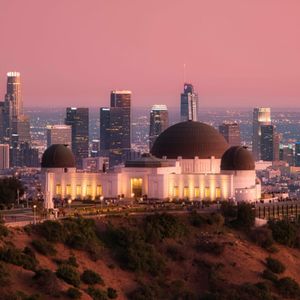
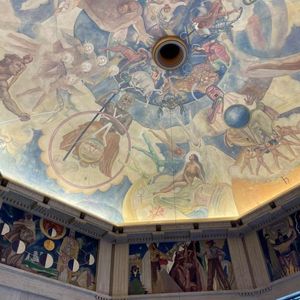
This building makes you believe in public institutions. Griffith J. Griffith — a complicated man who served time for shooting his wife — willed the funds to build a free observatory so that every Angeleno, regardless of income, could look through a telescope. The result is Art Deco civic architecture at its most idealistic: copper domes, WPA-era murals of celestial mythology, and a site that commands the entire LA basin. The 2006 Pfeiffer Partners renovation doubled the exhibit space without betraying the original spirit. It is the most visited public observatory on Earth, and on any clear night you can stand on the terrace surrounded by strangers who are all looking up.
Hammer Museum
Art MuseumLos Angeles, CA
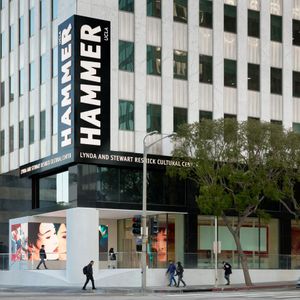
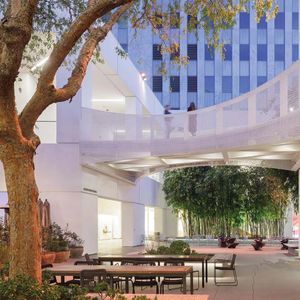
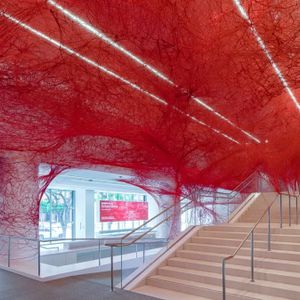
The Hammer's story is really two stories. Edward Larrabee Barnes built a respectable marble box for Armand Hammer's collection in 1990 — fine, forgettable, the kind of building you walk past. Then UCLA took over programming and it became one of the most intellectually ambitious contemporary art venues in the country. Michael Maltzan's 2021 courtyard renovation finally gave the building an exterior that matched its interior ambition — opening it to Wilshire with a landscaped public plaza that transformed a fortress into a civic space. A major Maltzan expansion is underway. The Hammer is proof that architecture doesn't have to arrive fully formed — sometimes the most important buildings are the ones that take thirty years to figure out what they want to be.
Los Angeles Union Station
AttractionsLos Angeles, CA
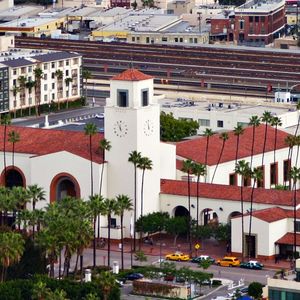
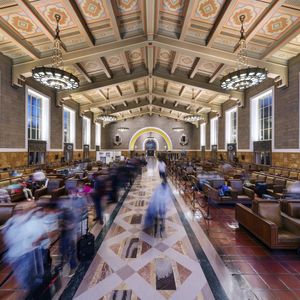
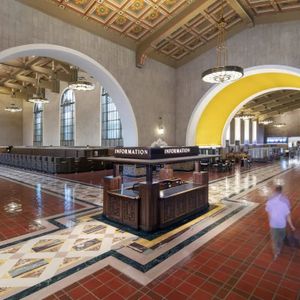
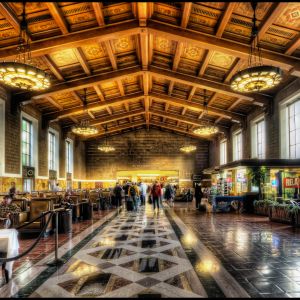
The last great American railroad terminal, and the most emotionally generous public building in the city. The Parkinsons blended Spanish Colonial Revival, Mission Revival, and Art Deco Streamline Moderne into something that could only exist in California — garden patios with olive trees, inlaid tile floors, 52-foot ceilings in a waiting room that makes you want to sit down even if you have nowhere to go. It was completed just as air travel was about to make it obsolete, which gives it a melancholy grandeur. Now a Metro hub, it still functions as the symbolic front door of Los Angeles. Every time the city needs a backdrop that says this place matters, it comes here.
Cathedral of Our Lady of the Angels
Modern CathedralLos Angeles, CA
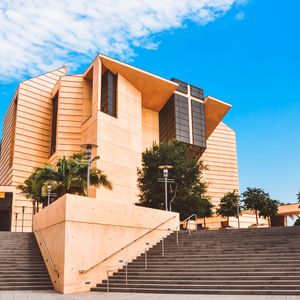
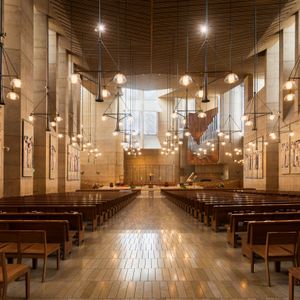
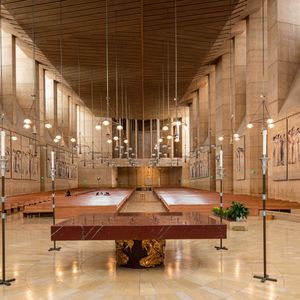
This is the building on the list most people underestimate, and they're wrong. Moneo — a Spanish Pritzker laureate — was asked to replace the earthquake-damaged St. Vibiana's, and instead of building another Gothic pastiche he designed something that feels like it has existed for a thousand years while belonging entirely to the present. No right angles, no pointed arches. Light enters through translucent alabaster panels and fills the nave with a warmth that is almost physical. John Nava's tapestries line the processional walk with 135 figures of communion saints. It is the only building in Los Angeles that reliably makes people lower their voices the moment they walk in.
Pacific Design Center
Design CenterWest Hollywood, CA
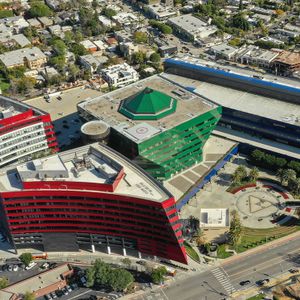
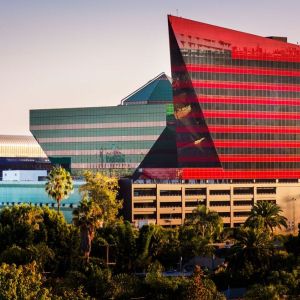
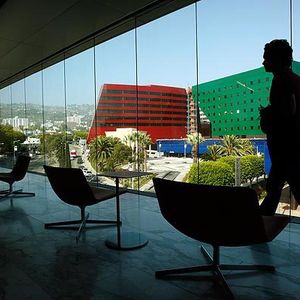
Three massive geometric volumes — the Blue Whale (1975), the Green Building (1988), and the Red Building (2012) — that took 37 years to complete. Pelli's original Blue Whale was a provocation: an enormous cobalt glass box dropped into a neighborhood of low-rise design showrooms, immediately nicknamed by locals who didn't know what to make of it. It was the first building to treat West Hollywood as a real urban center rather than a suburb with good restaurants. The three-phase completion traces the arc of commercial modernism from bold postmodernism to corporate minimalism.
Walt Disney Concert Hall
Symphony OrchestraLos Angeles, CA
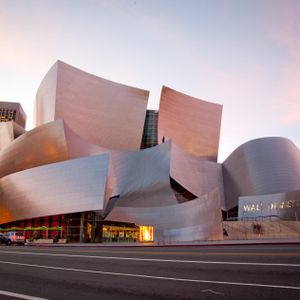
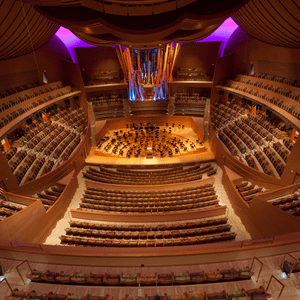
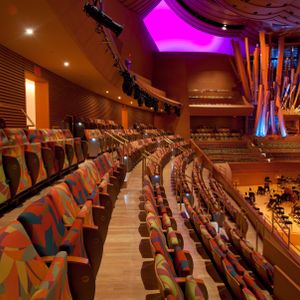
There is a moment, approaching from the south on Grand Avenue, when Disney Hall stops being a photograph you've seen a thousand times and becomes a physical fact — the steel panels catch the light and the whole thing seems to breathe. Gehry spent sixteen years fighting for this building, and it shows. Yasuhisa Toyota's interior is among the three or four finest concert acoustics on Earth. But the real achievement is civic: this building single-handedly convinced Los Angeles that its own downtown was worth caring about. Nothing on Grand Avenue made sense before it arrived. Everything built after it — the Broad, the park, the residential towers — exists because Disney Hall proved the street could hold serious architecture.
Cathedral Memorial Gardens
AttractionsGarden Grove, CA
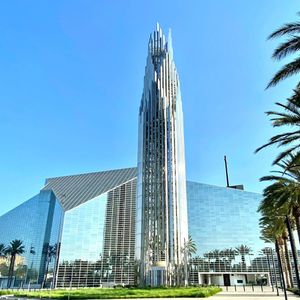
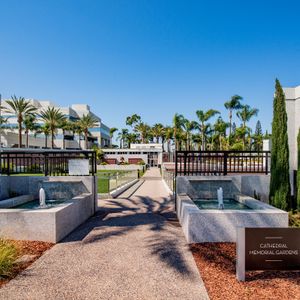
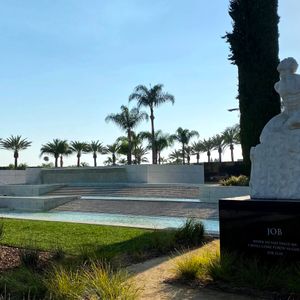
Philip Johnson's 10,000-pane glass star — originally the Crystal Cathedral for Robert Schuller's televangelist ministry — was the most spectacular religious building in postwar America when it opened. Then the ministry went bankrupt, and the Catholic Diocese of Orange did something extraordinary: they bought a Protestant megachurch and turned it into a Catholic cathedral. The renovation by RAA added quatrefoil glass panels that soften Johnson's relentless transparency into something warmer, more contemplative. The light inside now feels genuinely sacred rather than performative. It is one of only two Philip Johnson buildings in California and arguably a better building now than it was originally — a rare case of adaptive reuse not just preserving architecture but improving it.
Orange County Museum of Art
Modern art museumCosta Mesa, CA
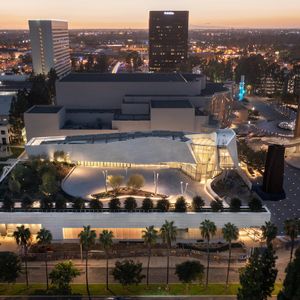
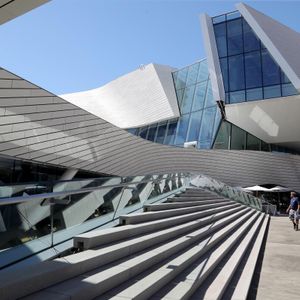
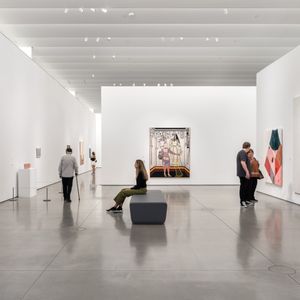
Fourteen years from competition to completion — three museum directors, competing visions, a jettisoned apartment tower proposal — and what emerged is arguably Mayne's most generous building. The $94 million OCMA is wrapped in a sculptural white terracotta skin that flows from exterior to interior, with a 50-foot atrium, glass sky bridges, and street-level galleries that literally open to the sidewalk. Free admission for a decade. Where the Caltrans building confronts, OCMA invites. Where Emerson College proves Morphosis can show restraint, OCMA proves Mayne can make a building that people actually want to enter and linger in. It sits on the Segerstrom Center campus surrounded by competent, forgettable buildings, and it makes all of them look timid. This is the building that should change how people think about Orange County.
Emerson College Los Angeles
PlaceLos Angeles, CA
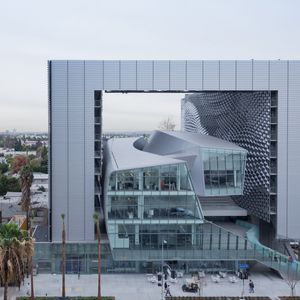
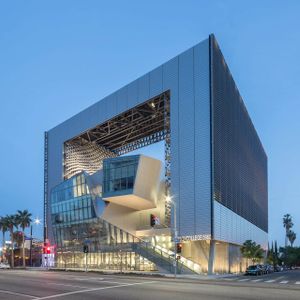
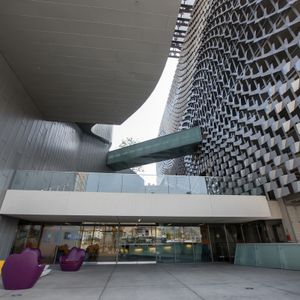
A 10-story academic building that wraps around itself in a twisting concrete form, creating outdoor terraces and framed views at every level. It is Morphosis at its most disciplined — the parametric geometry serves the program rather than announcing itself, which is not always the case with Mayne's work. But the real significance is urbanistic: this building proved that Sunset Boulevard, one of the most famous streets in the world and one of the most architecturally disappointing, could hold a building worth stopping for. It deserved better neighbors. Maybe someday it will get them.
The Theme Building
Historic Airport BuildingLos Angeles, CA
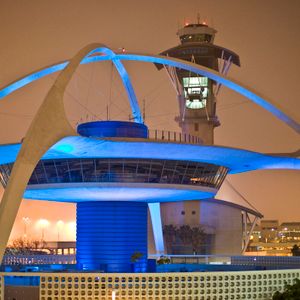
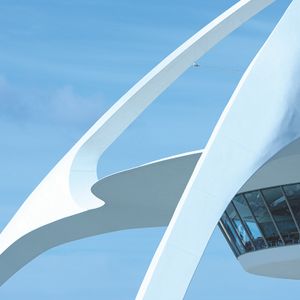
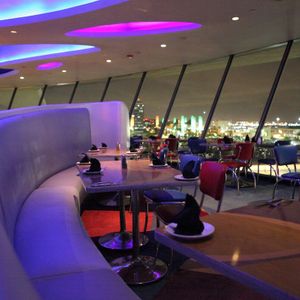
This is pure, uncut optimism in concrete. The parabolic arches — two intersecting hyperbolic paraboloids, if you want the engineering — were meant to look like a flying saucer, and they do. Paul Williams, the first Black member of the AIA and one of the most prolific architects in LA history, was a key collaborator. The building said: the future is arriving and it looks fantastic. That it now sits marooned in the middle of LAX's chaotic terminal sprawl only makes it more poignant — a monument to a moment when Americans genuinely believed that technology would make everything beautiful.
Capitol Records Building
Iconic Record BuildingLos Angeles, CA
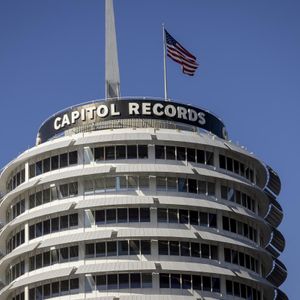
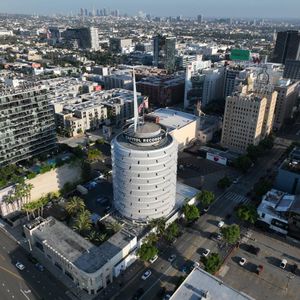
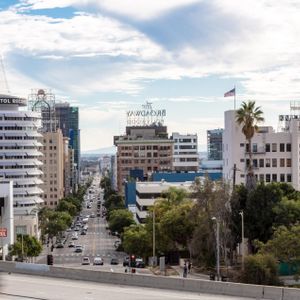
The world's first circular office tower, and one of those buildings so perfectly identified with its city that you forget how strange it actually is. Becket denied he designed it to look like a stack of records on a turntable, but nobody has ever believed him. The rooftop spire blinks "Hollywood" in Morse code — a detail so unnecessary and so perfect that it tells you everything about the era. Three stories underground are the echo chambers that gave Capitol's recordings their signature sound — Sinatra, the Beach Boys, Radiohead all tracked there. It is a commercial office building that somehow became a monument to an entire industry, and on the right evening, driving east on Hollywood Boulevard, it still stops you cold.
Watts Towers
Folk Art TowersLos Angeles, CA
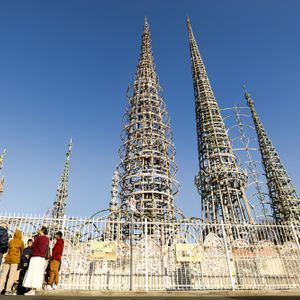
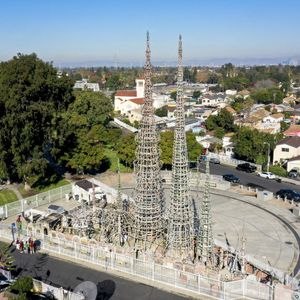
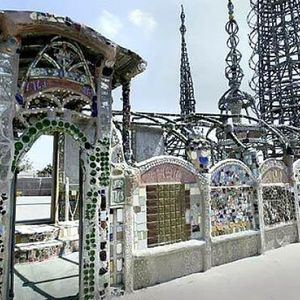
There is nothing else like this on Earth. Simon Rodia, an Italian immigrant tile-setter with no architectural training, spent 33 years building 17 interconnected towers from steel pipes, mortar, broken glass, seashells, ceramic tiles, and pottery shards — reaching 99 feet at the tallest point. He worked alone. He used no bolts, no rivets, no welds, no scaffolding. When he finished in 1954 he deeded the property to a neighbor and left Los Angeles forever, never explaining why he built it. The city tried to demolish the towers in 1959; an engineer's load test proved they were structurally sound. It is the largest work of folk art in the United States, a National Historic Landmark, and the most profound argument in Los Angeles for the proposition that one person's obsession can become everyone's cathedral.
The Broad
AttractionsLos Angeles, CA
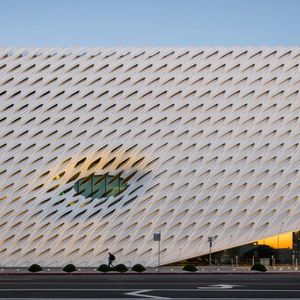
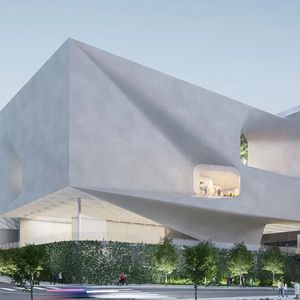
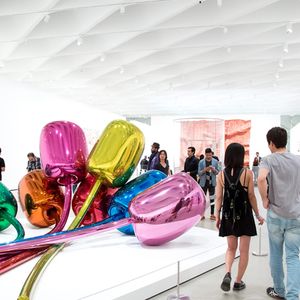
DS+R's "veil and vault" concept is clever — a honeycomb concrete exoskeleton filtering light over the galleries while the street level stays open and inviting. But what makes the Broad genuinely important is the decision to make it free. Eli and Edythe Broad put $140 million into a building and then removed the barrier that keeps most people out of museums. The collection inside — Koons, Basquiat, Rauschenberg, Ruscha — is world-class, but the real radicalism is in the business model. It completed the Grand Avenue cultural corridor that Disney Hall began, and on any Saturday afternoon it is the most democratically crowded museum in the city.
Caltrans District 7 Headquarters
AttractionsLos Angeles, California
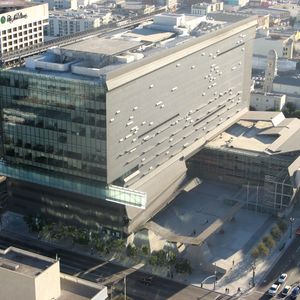
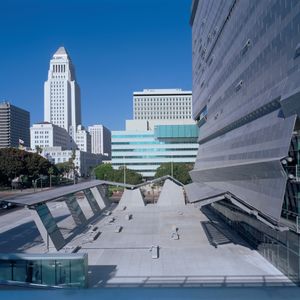
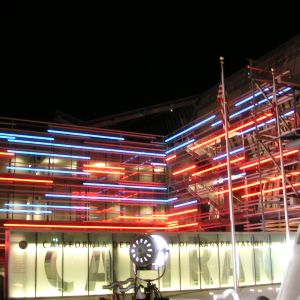
This is the angriest building on the list, and it needed to be. Mayne wrapped a state office tower in a kinetic aluminum skin of perforated panels that shift with sunlight and wind — the facade literally moves. For a government transportation building, it is outrageously ambitious, almost confrontational. Critics called it hostile. But Mayne was making a point: that civic architecture should provoke rather than soothe, that a building for public servants doesn't have to look like a filing cabinet. He won the Pritzker Prize the following year, and this building was central to the argument. You don't have to love it — but you can't ignore it, which is exactly the point.
San Juan Capistrano Regional Library
Tourist infoSan Juan Capistrano, CA
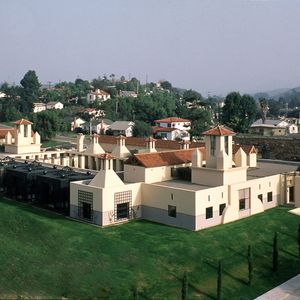
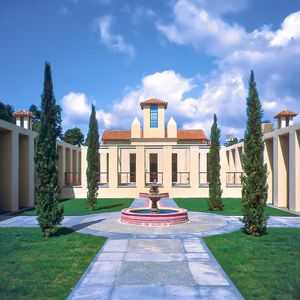
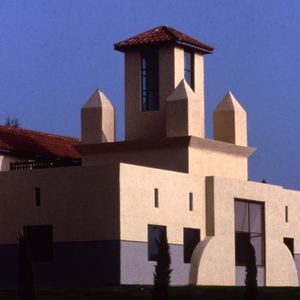
This tiny building — 12,000 square feet, $1.5 million — punches so far above its weight that it's almost embarrassing for everything built around it since. Graves won an international competition that also attracted Robert Stern and Charles Moore, and he beat them by taking the local requirement to build in the Mission style seriously rather than cynically. He studied the style's Renaissance and Latin American roots — Mexican ziggurats, Guatemalan sun temples — and reassembled them into a courtyard of square piers, light monitors, stucco walls, and reading rooms so intimate they make you want to sit down and stay for hours. It won the AIA Honor Award in 1985 and remains, over forty years later, a working branch library and the most architecturally significant building in Orange County. The fact that it is a library — a public institution for a public good — makes it even better. Graves understood that the postmodern argument wasn't just about style. It was about making buildings that people feel at home in.
Los Angeles Public Library
Central LibraryLos Angeles, CA
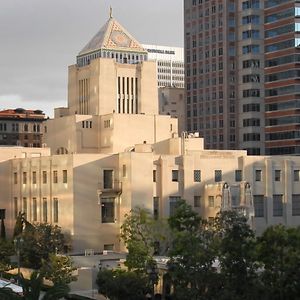
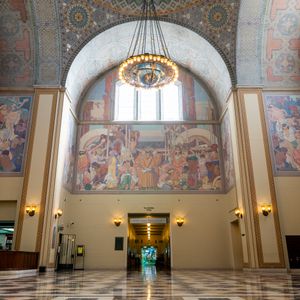
Goodhue died before the building was finished, but his vision survived: an Egyptian Revival/Art Deco tower crowned by a tiled pyramid, with Dean Cornwell's monumental murals inside depicting the history of California. Then in 1986, an arsonist nearly destroyed it — the fire burned for seven hours and damaged 400,000 books. The fact that the city rebuilt it rather than tearing it down tells you something about what this building means to LA. Hardy Holzman Pfeiffer's addition doubled the space with a soaring eight-story atrium that makes the original building feel like a jewel box nestled inside a modern cathedral. It is one of the most layered civic buildings in the country — a place where you can feel the scar of the fire and the stubbornness of the recovery in the same visit.
Petersen Automotive Museum
Automotive museumLos Angeles, CA
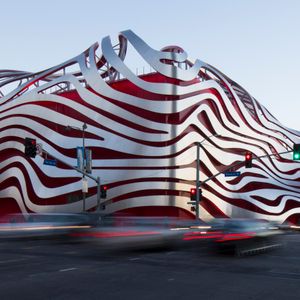
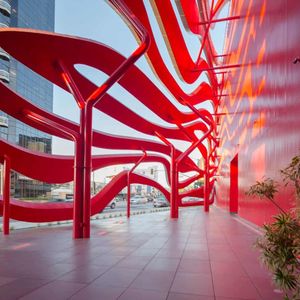
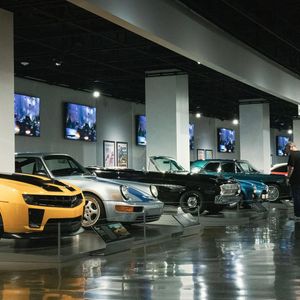
The original building was a department store. Now it looks like it's doing 60 mph standing still. KPF's renovation wrapped the box in ribbons of hot-rolled stainless steel over a red aluminum body — 300 tons of metal flowing over the facade in sweeping curves that suggest speed, motion, aerodynamics. For a museum devoted to the automobile, it is almost absurdly on the nose, and that's exactly why it works. The Petersen proved that adaptive reuse doesn't have to be deferential — that you can take a generic Miracle Mile box and turn it into one of the most photographed buildings in the city. It is loud, unsubtle, and completely committed to its own premise.
SoFi Stadium
Modern Sports ArenaInglewood, CA
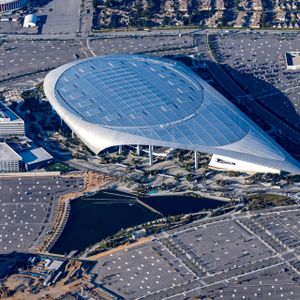
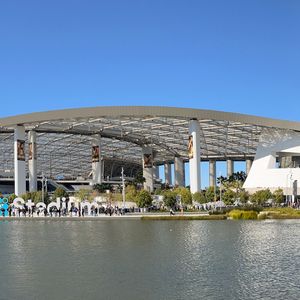
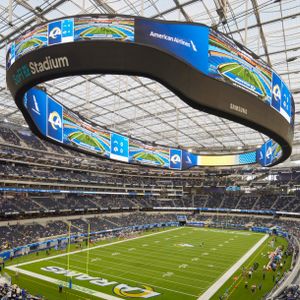
Spend $5.5 billion on a stadium and people will have opinions. SoFi's translucent ETFE canopy — 300,000 square feet of it, floating above the seating bowl without enclosing it — is either the most innovative roof in American sports architecture or the most expensive tent ever built. The truth is probably both. What's undeniable is the experience: you're sheltered from the sun but open to the air, and on game days the light filtering through the canopy creates something that feels genuinely new. It will host the 2028 Olympic ceremonies, and when two billion people watch that broadcast, this will be the building they associate with Los Angeles. For better or worse, SoFi is the civic architecture of the twenty-first century: privately funded, absurdly expensive, and built for a spectacle that most people will experience through a screen.